



 View Map
 Book an Appointment
 Find a Doctor
 Health Check-up


Managing Critical Stroke Patients – The Role of Emergency Teams
Mar 18, 2026
Category: Blog

At Jupiter Hospital, we are equipped with over 30 specialty treatments. There are specialised departments dedicated to illnesses which are backed by skilled and experienced doctors and team of healthcare professionals who are also experts at their craft.
Have a query or need to visit an expert? Book an appointment online to consult our doctors and we’ll take care of your needs.
Established in 2007, Jupiter Hospital is a tertiary care Hospital with a ‘Patient first’ ideology deeply instilled in its foundation, to deliver leading-edge healthcare to cater to the changing needs of the growing populace.


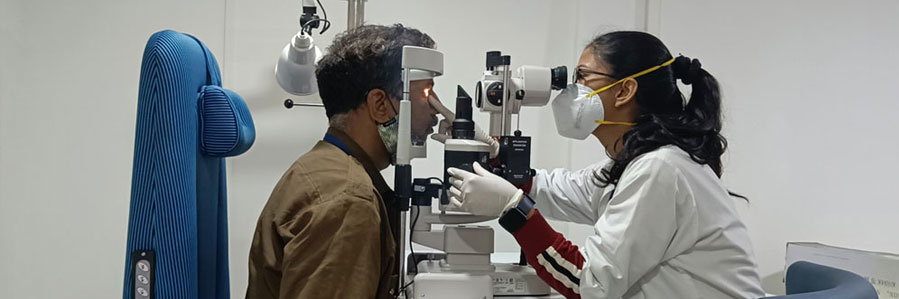
Through Jupiter Foundation, we ensure world class health care for the people that are economically challenged. Jupiter Foundation works on the philosophy of putting the patient first in everything.

At Jupiter, we believe there is a better path to healing that humanizes the practice of health care and inspires hope in the Patient & family who need it most. Our primary value – The needs of the patient come first – is at centre of our plans and decisions. You'll also find that our pride – in where we work, and in what we do – is a common trait. You will be truly part of an amazing team committed to solving the most serious and complex medical challenges.
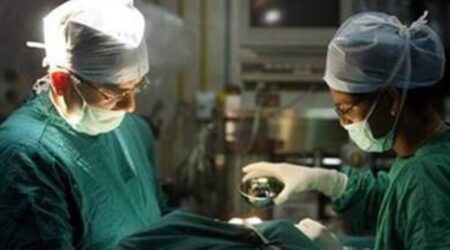

Eastern Express Highway, Service Rd, Next To Viviana Mall, Thane,
Maharashtra - 400601
Jupiter Hospital, Baner,
Pune.
Scheme No. 94, Sector 1,Ring Road, Near Teen Imli Square,
Indore,
Madhya Pradesh - 452020
Jupiter Hospital, Kalyan Shill Road,
Dombivli 421204

Mar 18, 2026
Category: Blog
Every minute after a stroke, nearly 1.9 million brain cells die. Stroke is not just a neurological emergency; it is a race against time. The difference between recovery and permanent disability often depends on how fast and how efficiently the emergency team responds.
Managing critical stroke patients requires coordinated action from the moment symptoms begin. Rapid triage, immediate imaging, timely intervention, and seamless transfer to intensive care can significantly improve survival and functional outcomes. In severe cases, stroke patients require advanced monitoring, ventilatory support, and round-the-clock supervision in a dedicated Neuro ICU.
Understanding how emergency teams function in these crucial hours highlights why specialized infrastructure and trained critical care teams are essential in stroke management.
Key Data Points:
| Parameter | Clinical Impact |
|---|---|
| Treatment within 4.5 hours | Higher chances of recovery with minimal disability |
| Door-to-CT scan time under 20 minutes | Faster diagnosis and intervention |
| Early ICU admission in severe stroke | Reduced complications and mortality |
| Dedicated stroke protocols | Improved survival and functional outcomes |
Early intervention can reduce long-term disability in stroke patients by up to 30 percent when managed within the therapeutic window.
Stroke management begins at the emergency department. The focus is rapid assessment and stabilisation.
Immediate priorities include:
Once stabilized, severe stroke patients are shifted to intensive care for continuous monitoring and complication prevention.
A coordinated emergency team includes emergency physicians, intensivists, neurologists, radiologists, and specialised nursing staff. Their responsibilities extend beyond initial treatment.
Time lost at any stage increases the risk of irreversible brain damage. Structured emergency protocols reduce these delays.
Critical stroke patients require more than standard ICU care. A dedicated Neuro ICU ensures specialized attention and rapid response.
Our Neuro ICU provides:
Close monitoring allows early detection of complications such as new neurological symptom, brain swelling, seizures, respiratory failure, or cardiac instability.
Immediate medical attention within the golden window significantly improves outcomes.
Emergency Team-Based Stroke Care vs General Care:
| Factor |
|
|
||
|---|---|---|---|---|
| Time to treatment |
Rapid and protocol-driven |
Often delayed |
||
| Monitoring | Continuous neurological assessment | Intermittent | ||
| Complication management | Immediate response | Reactive approach | ||
| ICU support | Dedicated Neuro ICU | General ICU | ||
| Outcome | Better survival and recovery | Higher disability risk |
Recovery depends on stroke severity and speed of intervention. Early physiotherapy, speech therapy, and rehabilitation begin as soon as the patient stabilizes. Close ICU monitoring reduces secondary complications that could worsen long-term outcomes.
Stroke management is not a single event but a coordinated process. The emergency team’s speed, decision-making, and intensive monitoring directly influence whether a patient regains independence or faces permanent disability.
A: The first 4.5 hours from symptom onset.
A: Yes, with rapid intervention and intensive monitoring.
A: To monitor for brain swelling, breathing issues, and other life-threatening complications.
A: Only moderate to severe cases need specialised critical monitoring.
A: Yes. Every minute of delay increases brain cell loss and disability risk.
Critical stroke management depends on speed, structure, and specialised intensive care. A well-coordinated emergency team supported by a dedicated Neuro ICU significantly improves survival and functional recovery.
At Vishesh Jupiter Hospital, stroke care is supported by advanced emergency protocols, round-the-clock intensivist supervision, and a fully equipped Neuro ICU. Patients and families facing stroke emergencies are encouraged to seek immediate evaluation.

Blog
Mar 18, 2026
Blog
Mar 18, 2026
Blog
Mar 18, 2026
Blog
Mar 18, 2026
Blog
Mar 18, 2026

Blog
Mar 18, 2026

Blog
Jan 16, 2026
Blog
Apr 13, 2023
Blog
Apr 13, 2023
Blog
Apr 13, 2023
Blog
Apr 13, 2023
Blog
Apr 13, 2023
Blog
Apr 13, 2023
Blog
Apr 13, 2023
Blog
Apr 13, 2023
Blog
Apr 13, 2023
Blog
Apr 13, 2023
Blog
Apr 13, 2023
Blog
Apr 13, 2023
Blog
Apr 13, 2023
Blog
Apr 13, 2023
Blog
Apr 13, 2023
Blog
Apr 13, 2023
Blog
Apr 13, 2023
Blog
Apr 13, 2023
Blog
Apr 11, 2023
Blog
Apr 11, 2023
Blog
Apr 10, 2023
Blog
Apr 10, 2023
Blog
Apr 10, 2023
Blog
Apr 10, 2023
Blog
Apr 10, 2023
Blog
Apr 10, 2023


 Find a Doctor
 Health Checkup
 Book an Appointment