



 View Map
 Book an Appointment
 Find a Doctor
 Health Check-up


When Should Liver Transplantation Be Considered in Chronic Liver Disease?
Oct 23, 2026
Category: Blog

At Jupiter Hospital, we are equipped with over 30 specialty treatments. There are specialised departments dedicated to illnesses which are backed by skilled and experienced doctors and team of healthcare professionals who are also experts at their craft.
Have a query or need to visit an expert? Book an appointment online to consult our doctors and we’ll take care of your needs.
Established in 2007, Jupiter Hospital is a tertiary care Hospital with a ‘Patient first’ ideology deeply instilled in its foundation, to deliver leading-edge healthcare to cater to the changing needs of the growing populace.



Through Jupiter Foundation, we ensure world class health care for the people that are economically challenged. Jupiter Foundation works on the philosophy of putting the patient first in everything.

At Jupiter, we believe there is a better path to healing that humanizes the practice of health care and inspires hope in the Patient & family who need it most. Our primary value – The needs of the patient come first – is at centre of our plans and decisions. You'll also find that our pride – in where we work, and in what we do – is a common trait. You will be truly part of an amazing team committed to solving the most serious and complex medical challenges.


Eastern Express Highway, Service Rd, Next To Viviana Mall, Thane,
Maharashtra - 400601
Jupiter Hospital, Baner,
Pune.
Scheme No. 94, Sector 1,Ring Road, Near Teen Imli Square,
Indore,
Madhya Pradesh - 452020
Jupiter Hospital, Kalyan Shill Road,
Dombivli 421204
Oct 23, 2026
Category: Blog
When liver disease becomes advanced, one of the most important questions for patients and their families is: When is medical treatment no longer enough, and when should liver transplantation be considered?
Liver cirrhosis accounted for approximately 18.9 deaths per 100,000 population in India in 2021, according to WHO estimates. India performed 20,138 organ transplants in 2025, the highest recorded in a single year, suggesting that access to organ transplantation in India is steadily increasing
A liver transplantation is not required for every patient with chronic liver disease. Many people remain stable for years with appropriate medicines, nutrition, lifestyle changes, and regular monitoring. However, once the liver begins to lose its ability to perform essential functions, or complications of chronic liver disease start occurring repeatedly, transplant evaluation becomes necessary.
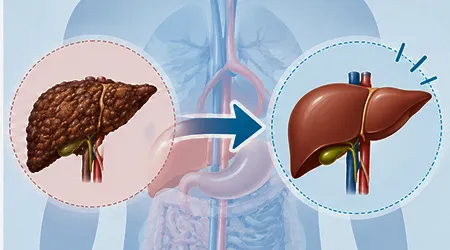
Chronic liver disease is progressive deterioration of liver disease lasting beyond 6 months. It can gradually cause scarring of the liver, known as cirrhosis.
Chronic liver diseases or cirrhosis can be compensated or decompensated. In the compensated stage, the liver can perform all its essential functions and the patients have few or no symptoms. They need to be on appropriate treatment and regular follow up and do not require liver transplantation. Patients with decompensated chronic liver disease have a significantly impaired liver function. They have complications of liver disease (fluid in abdomen, jaundice, bleeding, or altered behaviour). They must be evaluated for liver transplantation.
Patients with chronic liver disease should seek specialist assessment if they develop:
These symptoms do not automatically mean that a transplant is required, but indicate that the disease severity should be reassessed carefully.
No single test determines whether somebody should undergo transplantation. The transplant team evaluates several factors, including:
The Model for End-Stage Liver Disease (MELD) score uses laboratory parameters to estimate the severity and short-term risk associated with advanced liver disease.
A higher score generally indicates more severe disease.
Certain patients may have serious complications despite a relatively lower score, which is why symptoms, hospital admissions and the overall clinical condition remain equally important.
No.
Being referred for liver transplant evaluation does not mean that transplant surgery will happen immediately.
Evaluation allows the medical and surgical transplant team to understand the patient's condition, identify risks, improve nutrition and fitness wherever possible, manage complications and plan ahead.
For many patients, this preparation is particularly valuable because waiting until they become critically ill may increase the complexity and risk of treatment.
There are two major pathways for liver transplantation. The appropriate pathway depends on the patient's medical condition, urgency, donor availability and transplant evaluation.
Living Donor Liver Transplant
A healthy and medically suitable donor gives a portion of their liver to the recipient. Because the liver has a remarkable ability to regenerate, both the donor's remaining liver and the transplanted portion can increase in size after surgery.
The donor undergoes an extensive and independent medical evaluation to ensure that donation can be performed safely.
Deceased Donor Liver Transplant
A liver donated after certified death may be allocated to an eligible patient registered on the transplant waiting list according to applicable national organ-allocation regulations.
For appropriately selected patients with end-stage liver disease, transplantation can replace a failing liver and provide the possibility of substantially improved survival and quality of life.
However, it is a major procedure and requires careful patient selection
Possible challenges include:
Large international transplant datasets show that the majority of appropriately selected liver transplant recipients achieve good long-term outcomes, although individual results vary according to disease severity, age, donor factors and other medical conditions.
Recovery begins immediately after surgery, with close monitoring in the intensive care unit followed by continued hospital care.
After discharge, regular follow-up is particularly important during the initial months. Patients usually require:
Most patients gradually return to everyday activities as recovery progresses, but the timeline differs for every individual.
No. Many patients with compensated cirrhosis can remain stable with appropriate treatment and monitoring. Transplantation is generally considered when liver function deteriorates, complications develop or certain specific conditions such as eligible liver cancers occur.
A MELD score of 15 or above has traditionally been an important point for transplant referral, but the score is not the only criterion. Patients who experience ascites, variceal bleeding, hepatic encephalopathy, jaundice or other significant complications may need evaluation even when the numerical score does not tell the complete story.
In some conditions, treating the underlying cause can stabilise or improve liver function. This may occur after treatment of viral hepatitis, stopping alcohol, controlling metabolic risk factors or treating certain reversible causes. In advanced irreversible liver failure, however, transplantation may be the definitive treatment.
There is no single age cut-off applicable to every patient. Biological fitness, heart and lung health, kidney function, frailty, other diseases and expected benefit from transplantation are evaluated together.
Potentially, yes. A medically and legally eligible family member may be considered for living liver donation. Donor safety is the first priority, and detailed medical, anatomical and psychosocial assessment is required before donation can be approved.
Absolutely no. Early evaluation gives doctors time to determine whether transplantation is appropriate and allows the patient to be medically and nutritionally optimised. A transplant assessment itself does not mean that immediate surgery is required. The outcomes of liver transplantation is poorer in patients transplanted when they are critically ill and have multiple organ failures.
Liver transplantation can be life-saving for appropriately selected patients with chronic liver disease. However, achieving the right outcome depends significantly on recognising the appropriate time for evaluation. Patients, who are deemed candidates for liver transplantation, should be evaluated and listed expeditiously in the state organ transplant registry, so that they are eligible for an organ when available. There is a small window of opportunity before the patient becomes too sick for a transplantation. It is important to identify this window for the best outcomes.

Blog
Jun 17, 2026

Blog
Mar 18, 2026

Blog
Mar 18, 2026

Blog
Mar 18, 2026

Blog
Mar 18, 2026

Blog
Mar 18, 2026

Blog
Mar 18, 2026

Blog
Mar 18, 2026

Blog
Jan 16, 2026

Blog
Apr 13, 2023
Blog
Apr 13, 2023
Blog
Apr 13, 2023
Blog
Apr 13, 2023
Blog
Apr 13, 2023
Blog
Apr 13, 2023
Blog
Apr 13, 2023
Blog
Apr 13, 2023
Blog
Apr 13, 2023
Blog
Apr 13, 2023
Blog
Apr 13, 2023
Blog
Apr 13, 2023
Blog
Apr 13, 2023
Blog
Apr 13, 2023
Blog
Apr 13, 2023
Blog
Apr 13, 2023
Blog
Apr 13, 2023
Blog
Apr 13, 2023
Blog
Apr 11, 2023
Blog
Apr 11, 2023
Blog
Apr 10, 2023
Blog
Apr 10, 2023
Blog
Apr 10, 2023
Blog
Apr 10, 2023
Blog
Apr 10, 2023
Blog
Apr 10, 2023



 Find a Doctor
 Health Checkup
 Book an Appointment